
Exposed by design
Lifting the safety of anonymity, compliance, or peer review

You can read this post, or listen to it, or both.
I hadn’t fully realised the de-responsibilising aspects of peer review. Of having multiple co-authors on a paper. Of editorial, compliance, legal and regulatory reviews. The multiple systems that ensure that published information can withstand scientific and ethical scrutiny.
As I started writing in A Creativity Multiverse, I had to face the absence of these well-known guardrails. That I bear responsibility for the words I’d line up, including their inherent risks.
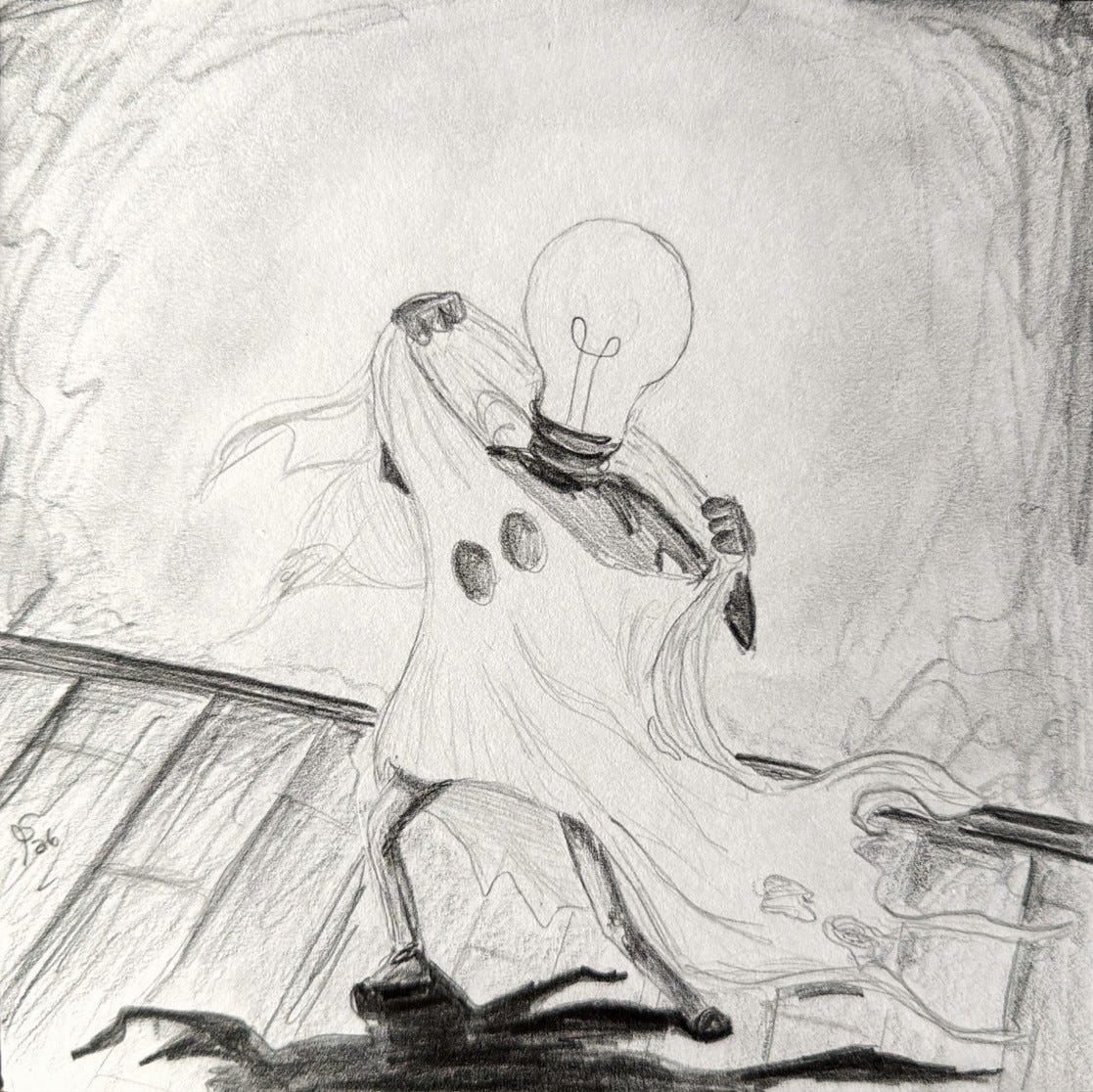
The fact that Valerie Livesay, PhD and I adopted the 4-eye principle, i.e. two different people reviewing content to offer feedback and prevent mistakes, only just slightly lowered my discomfort.
As a science ghost writer for almost 15 years, I got used to being nameless and to adapt my work to show little of my personality. My style was based on the data, rigorously careful, and tailored to whatever was on my clients’ brief. I learned early on that letting my ego show in the content was a mistake. An unwelcomed artistic indulgence.
In A Creativity Multiverse, it’s a different game: I am no ghost. I get to explore the limits of my habitual way of writing. What is my penmanship like? How are my thoughts (dis)organised? What does my ego crave writing? What do I shy away from saying? I’m not used to it, and I don’t trust myself outside of my habitual guardrails.
Entering the subjective or opinion realms makes me nervous. Nervous that I’ll potentially mislead, inflame, humiliate, minimize, belittle, exaggerate, misquote, misinterpret, fail to substantiate, or betray by producing the same meaningless junk I judge and criticise so easily.
Because my internal Guard Dog, who’s been trained over decades to pursue evidence with ethics and integrity, snarls at the thought of letting something out there that isn’t rigorously validated.
An old friend and mentor recommended I publish under an alias so that this experiment wouldn’t risk interfering with my client work or reputation. But that would defeat the purpose. Ghost-writing had become too safe. I needed to own the discomfort and feel the cringe. To let my writing be exposed and judged in the open, as I learn to befriend this encounter. To bear the blow(s) from whatever may backfire (or imagine how it might). To meet my fear of being dismissed, invisible evermore, under my own name.
From hoping that I’m read to experiencing the risks of what I dare to put on a page. And maybe find out what other guardrails are still editing me under my nose. And to feel in my very-un-ghostlike flesh and bones, the thrill of doing it anyway.
What guardrails make your creative work smoother? How might it evolve without them?
What are those that hinder your creative work? What might be the cost of removing them? For you, for others?
And one last, with a bit of role-play…
What would you write if you were a ghost writer?
If you are, what don’t you dare writing under your name?
Until the next post
Revisit a sentence or paragraph you’ve recently written that sounds neutral or unremarkable.
Ask yourself:
What were the guardrails or constraints (editorial, scientific, social, etc.), that might have shaped its phrasing or meaning?
How might the expectations of these constraints have affected the integrity or resonance of what you wished to communicate?
In essence, doubting yourself means that you are carrying the weight of your words. Others share their thoughts, causing the impact you fear, blissfully ignorant of the damage they have done. To quote Charles Bukowski: “The problem with the world is that the intelligent people are full of doubts, while the stupid ones are full of confidence.”
Keep on seeking and doubting!
In a sense, multiple layers of review could weaken the message because everyone, including the writer, makes revisions to provide their own sense of comfort. That said, I do think regulatory review is important because that review looks at the work through a different lens that the author might not be able to do because they are so close to the work. Where it can be a problem is if it makes the author and reviewers lazy by assuming that someone else will point out the issues if there are any. I can relate to the fear of sharing your own voice. It's something I'm working on too. Sharing writing that hasn't been vetted in the way we're used to feels strange, but then I remember that most people aren't used to the level of review that we are and they are writing.